Learning Outcomes
i. Explore the captivating phenomenon of iron's nemesis – rusting, a prime example of corrosion.
ii. Unravel the chemical process underlying rusting, identifying the key factors that contribute to this destructive transformation.
iii. Recognize the significance of preventing iron rusting and the various methods employed to safeguard its integrity.
iv. Appreciate the ubiquitous nature of iron and the challenges posed by its susceptibility to rusting.
Introduction
In the realm of chemistry, where elements dance with transformations, iron emerges as a ubiquitous and versatile metal, shaping our infrastructure, vehicles, and countless tools. However, this robust metal harbors a hidden adversary – rusting, a relentless process that gradually degrades its integrity and poses a significant challenge in various industries. This lesson will embark on a journey into the heart of rusting, illuminating its chemical underpinnings, the factors that promote its occurrence, and the strategies employed to prevent it.
i. Defining Rusting: The Reddish Transformation of Iron
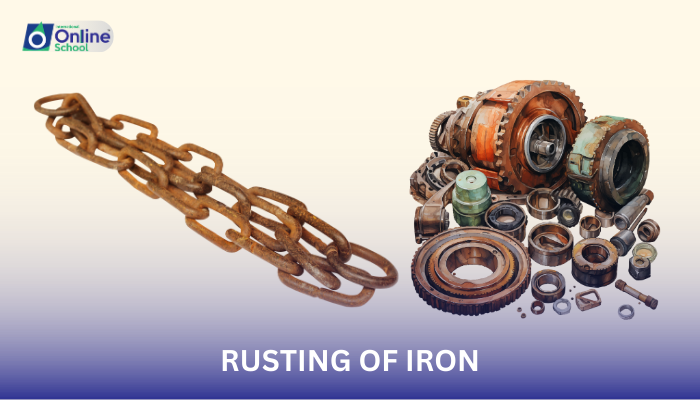
Rusting, also known as iron corrosion, is the electrochemical degradation of iron in the presence of oxygen and water. This process leads to the formation of a reddish-brown substance called rust, a mixture of iron oxides and hydroxides.
ii. Unveiling the Chemical Mechanism: A Tale of Oxidation and Reduction
Rusting involves a complex interplay of oxidation and reduction reactions:
Oxidation: Iron atoms at the metal surface lose electrons, transforming into iron ions (Fe2+): Fe → Fe2+ + 2e-
Reduction: Oxygen molecules present in the air accept electrons from the metal, forming hydroxide ions (OH-): ½ O2 + 2H+ + 2e- → 2OH-
Formation of Rust: Iron ions react with hydroxide ions to form hydrated iron(III) oxide, the primary component of rust: Fe2+ + 2OH- → Fe(OH)2
iii. Factors Favoring Rusting: A Symphony of Conditions
Several factors promote the occurrence of rusting:
Presence of oxygen and water: These substances are essential for the redox reactions that drive rusting.
Electrolytic environment: The presence of electrolytes, such as salt water or acidic solutions, facilitates the movement of ions and accelerates corrosion.
Variations in surface properties: Defects or scratches on the iron surface can act as initiation points for rusting.
iv. Preventing Iron's Demise: A Shield Against Rust
Various methods are employed to prevent iron from rusting:
Protective coatings: Applying protective layers, such as paint, zinc plating, or anodizing, can isolate the iron from the corrosive environment.
Cathodic protection: Introducing an external electrical current to make the iron more cathodic, preventing its oxidation.
Sacrificial anodes: Attaching a more reactive metal, such as zinc or magnesium, to the protected iron, allowing it to corrode preferentially.
v. The Ubiquity of Iron and the Challenges of Rusting:
Iron, with its remarkable strength, affordability, and versatility, is widely used in construction, transportation, and manufacturing. However, its susceptibility to rusting poses a significant challenge, requiring ongoing maintenance and protective measures to safeguard its integrity.
Rusting, the relentless degradation of iron, stands as a testament to the dynamic nature of chemistry and the challenges posed by corrosion in our modern world. Understanding the chemical process of rusting, the factors that promote its occurrence, and the strategies employed to prevent it empowers us to appreciate the importance of protecting iron and prolonging the lifespan of our infrastructure, vehicles, and machinery.
